PAS: problem, agitation and solution, and why it beats AIDA in short copy

By Tiago Costa·Updated on August 5, 2026
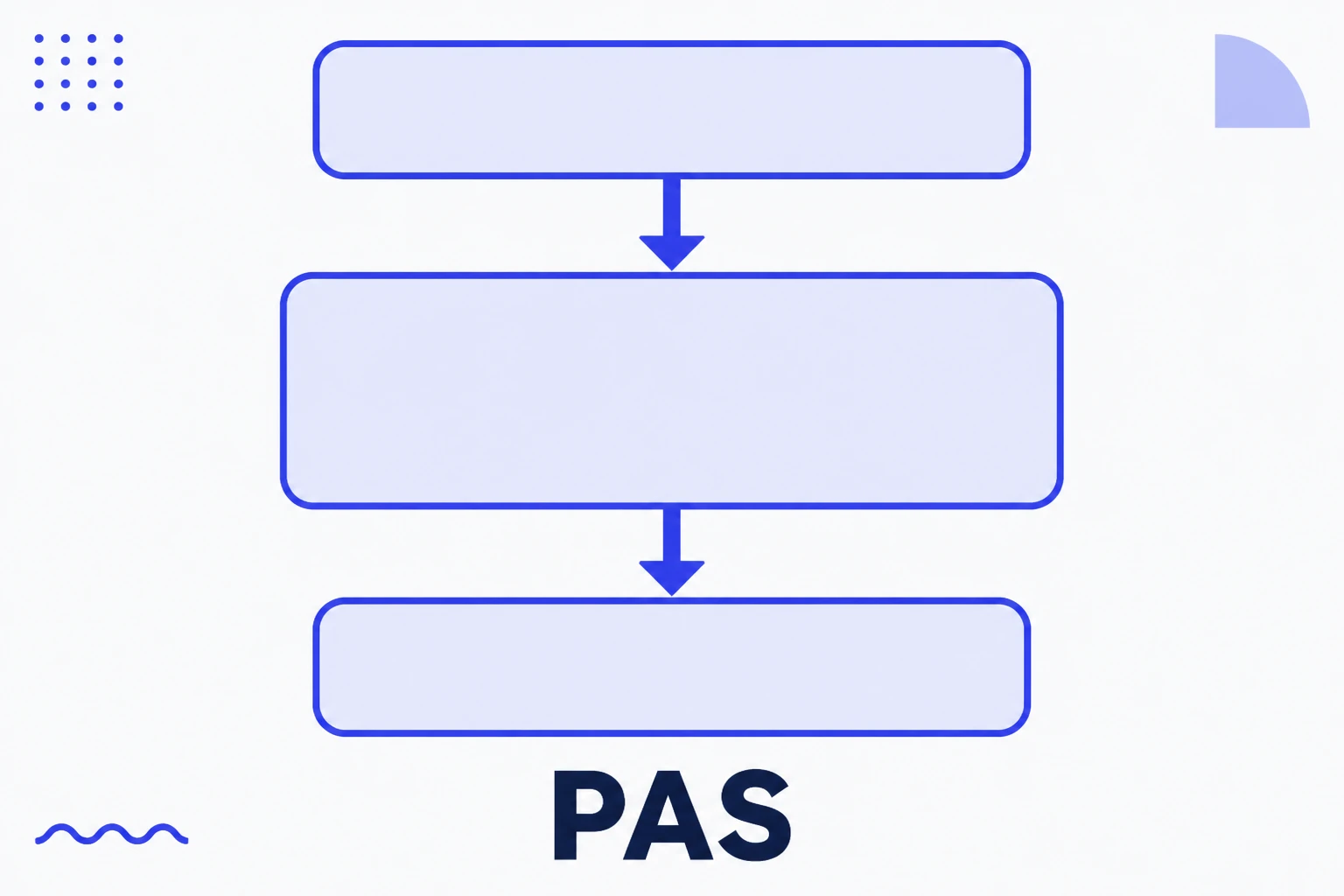
Definition
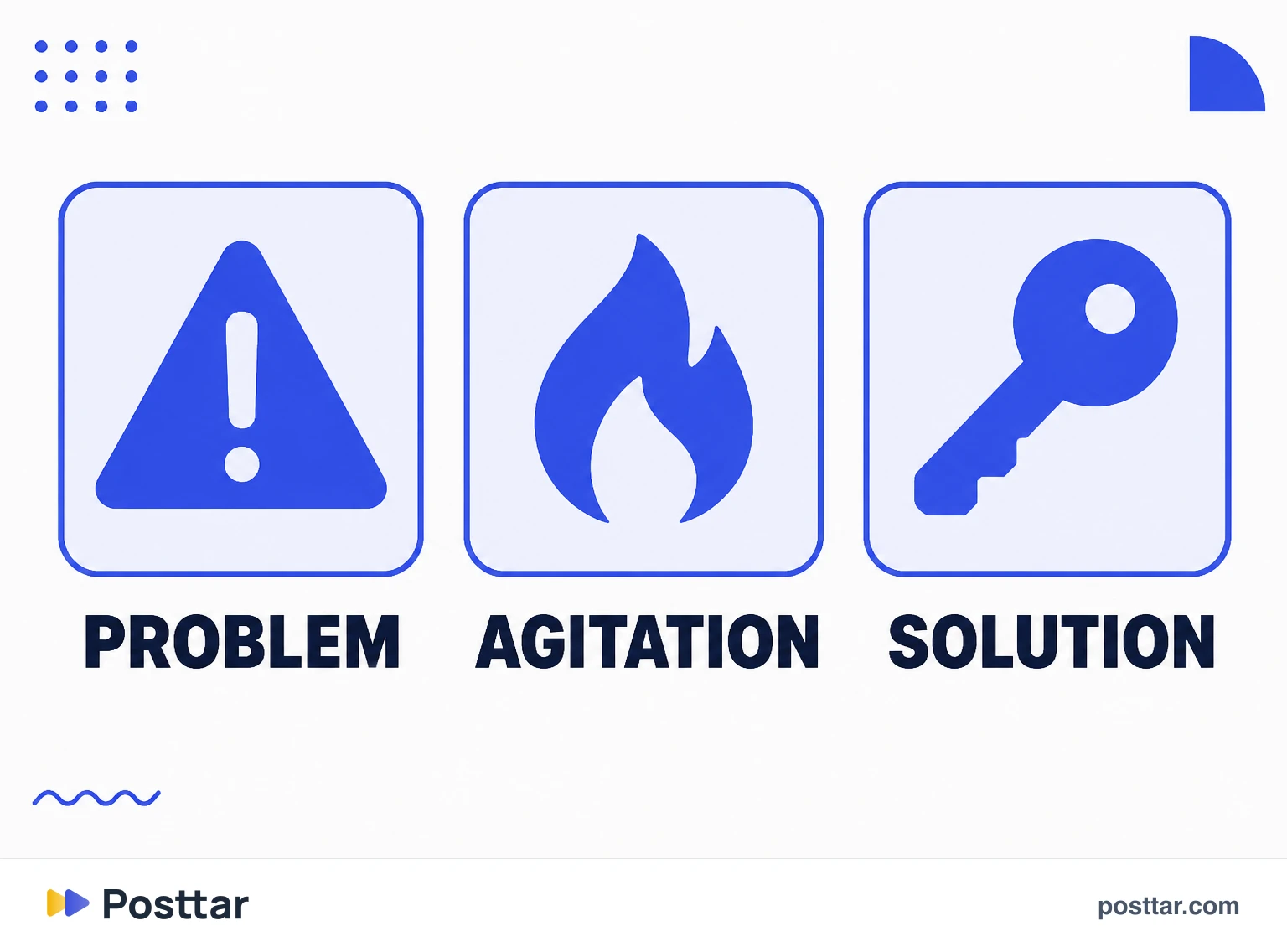
PAS is problem, agitation and solution.
- Problem. Naming what the person already feels, in their words.
- Agitation. Showing the consequence of not solving it.
- Solution. Presenting the way out, with proof.
- It fits short copy, which is why it dominates social media.
The three stages
- Problem. Naming precisely something the person already lives. The sign it worked is recognition: they think "that is exactly it". It only works with the audience's literal language, not with the abstract category of the pain.
- Agitation. Making the consequence of leaving things as they are concrete. It is not turning up the drama, it is showing the real cost: time lost, money left on the table, what happens if nothing changes.
- Solution. The way out, presented once the problem is alive in the reader's head. With proof, not just a claim.
The formula's strength sits in the middle stage, which is exactly the one most people skip. Without agitation the text becomes "this problem exists, and here is the solution", which is information rather than persuasion.
Why it works better in short content
AIDA has to build attention, interest and desire before asking. That takes room.
PAS starts further along: if the problem is well chosen, it is the attention. The person stops because the sentence described their life, not because the sentence was clever. And interest comes built in, because nobody is indifferent to their own problem.
Which is why almost all social media content that converts follows PAS, even when the writer never heard of it. A thirty second Reel holds the three stages comfortably.
The line between agitating and manipulating
This is the part almost no material on the formula covers, and it is the most important.
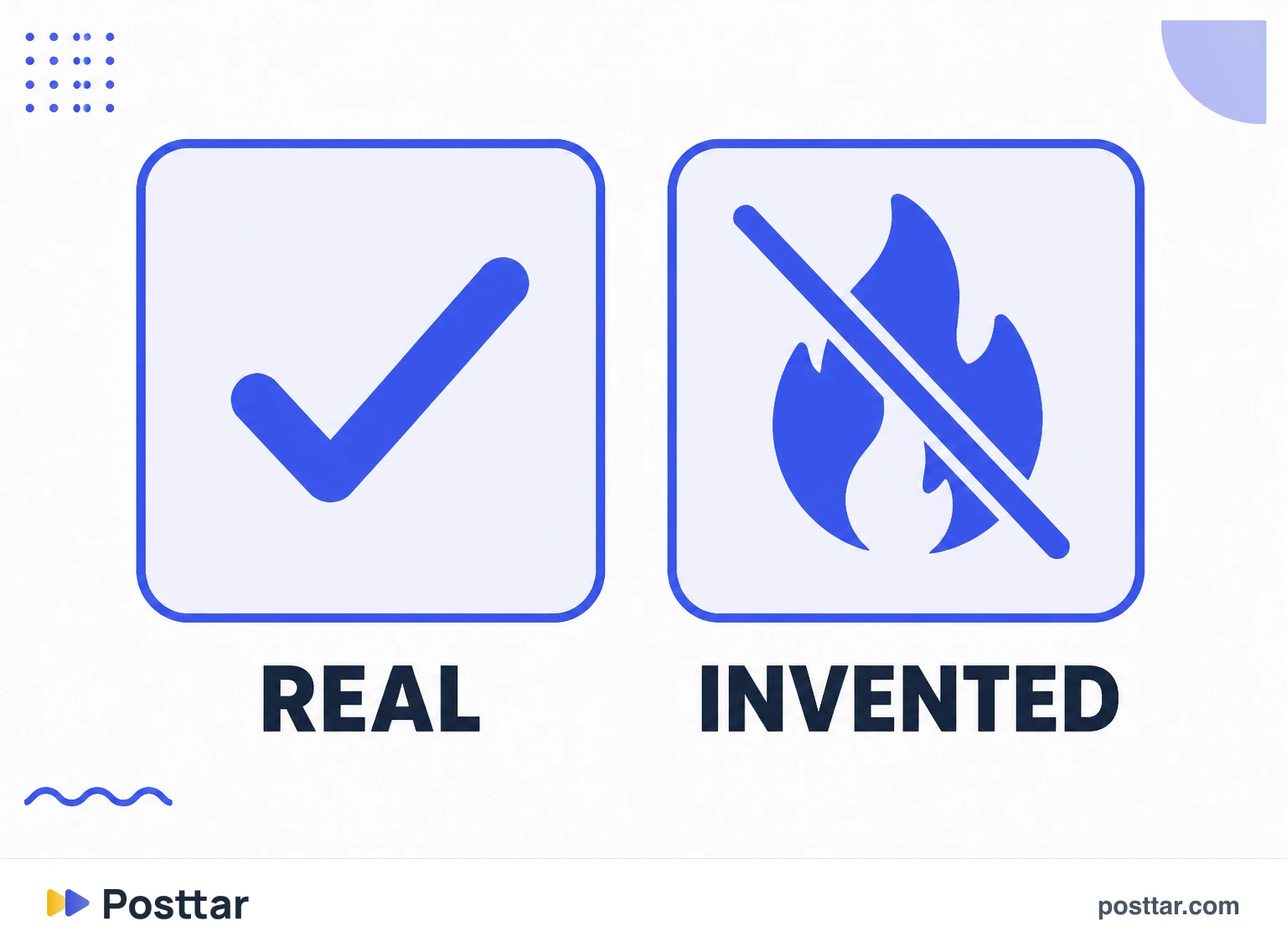
Agitation is the stage that most easily turns abusive, because the technique works by amplifying discomfort. The line is the same as with psychological triggers: is the consequence real or invented?
- Showing the true cost of not solving something is a service, and it is sometimes the only way a person grasps the size of the problem.
- Inventing consequences, exaggerating risk or creating fear that does not match reality is manipulation, and it is expensive.
There is also a common sense limit: in health, money and safety topics, agitation needs a light hand. Amplifying real fear in those subjects hurts actual people.
Common mistakes
- A generic problem. "Do you want to grow on Instagram?" is not a problem, it is a category. "You post every day and reach stays exactly where it was" is a problem.
- Skipping agitation. The most common mistake, and the one that costs the most conversion.
- Over agitating. Paragraphs of suffering tire people and read as dishonest. One or two concrete sentences are enough.
- A solution that does not solve the named problem. It happens more than you would think: the text agitates one pain and offers something else.
- Using it on someone already convinced. For a person ready to buy, naming the problem again wastes their time.
Checklist
- The problem is in the words my audience uses.
- Agitation exists, and it is concrete.
- The consequence I show is real, not invented.
- The solution solves exactly the problem I named.
- I do not use the formula on people already ready to buy.
Frequently asked questions
What is the PAS copywriting formula?
It is the three stage formula: problem, agitation and solution. You name the problem the person has, show the consequence of leaving it unsolved, and then present the way out.
What does each letter in PAS stand for?
P for problem, naming something the person already lives; A for agitation, making the consequence of not solving it concrete; and S for solution, presenting the way out once the problem is alive in the reader's head.
What is the difference between PAS and AIDA?
AIDA has four stages and must build attention and interest from scratch, which needs room. PAS starts from the problem, which is attention and interest in itself, so it fits short text and video better.
How do you agitate without manipulating?
Show only real consequences of not solving the problem. Inventing risk, exaggerating or creating fear that does not match reality is manipulation. In health, money and safety topics, agitation needs an especially light hand.
Why is my PAS copy not working?
The most common reasons are a problem too generic to feel like a real pain, skipping the agitation stage that gives the formula its force, and presenting a solution that does not solve exactly the problem you named.
Related concepts
AIDA
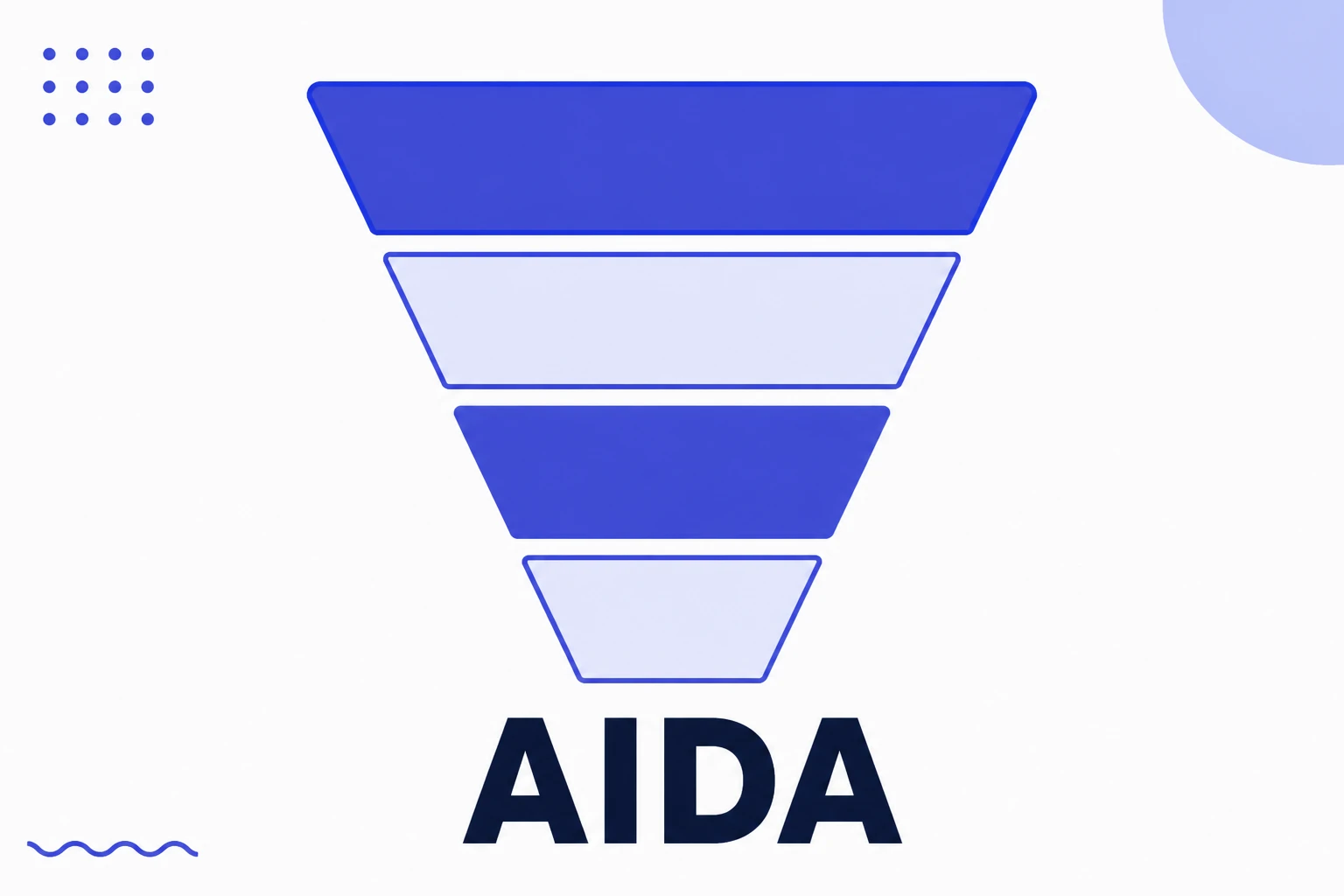
AIDA is the classic four stage persuasion model: attention, interest, desire and action. It was born in late nineteenth century advertising and survived because it describes a sequence that makes sense in any medium: first someone has to stop, then want to understand, then want to have, and only then act. It is structural scaffolding, not a guarantee of results.
Read the entry
Copywriting
Copywriting is writing built to provoke a specific action: buy, sign up, reply, click. What separates it from other kinds of writing is not style, it is the success criterion. A literary text is judged by the experience it creates; copy is judged by how many people did what it asked. That changes everything, including the order in which it gets written.
Read the entry
Psychological trigger
Psychological trigger is the popular name for the shortcuts the brain uses to decide without analysing everything. They come from persuasion psychology research and describe real behavioural tendencies, such as trusting demonstrated authority or valuing what is scarce. What circulates as a list of dozens of triggers is almost always the same half dozen principles renamed.
Read the entry
Hook
A hook is the opening of a piece of content, responsible for buying the first seconds of attention and making someone decide to keep going. In short video it occupies the first three seconds and is simultaneously verbal, visual and sonic; in a carousel it is the cover; in text it is the first line. A hook is not decoration: because the distribution system watches retention and dwell time, it determines whether the content ever gets delivered beyond the people who already follow you.
Read the entry