AIDA: attention, interest, desire and action, and what the formula does not solve

By Tiago Costa·Updated on August 5, 2026
Definition
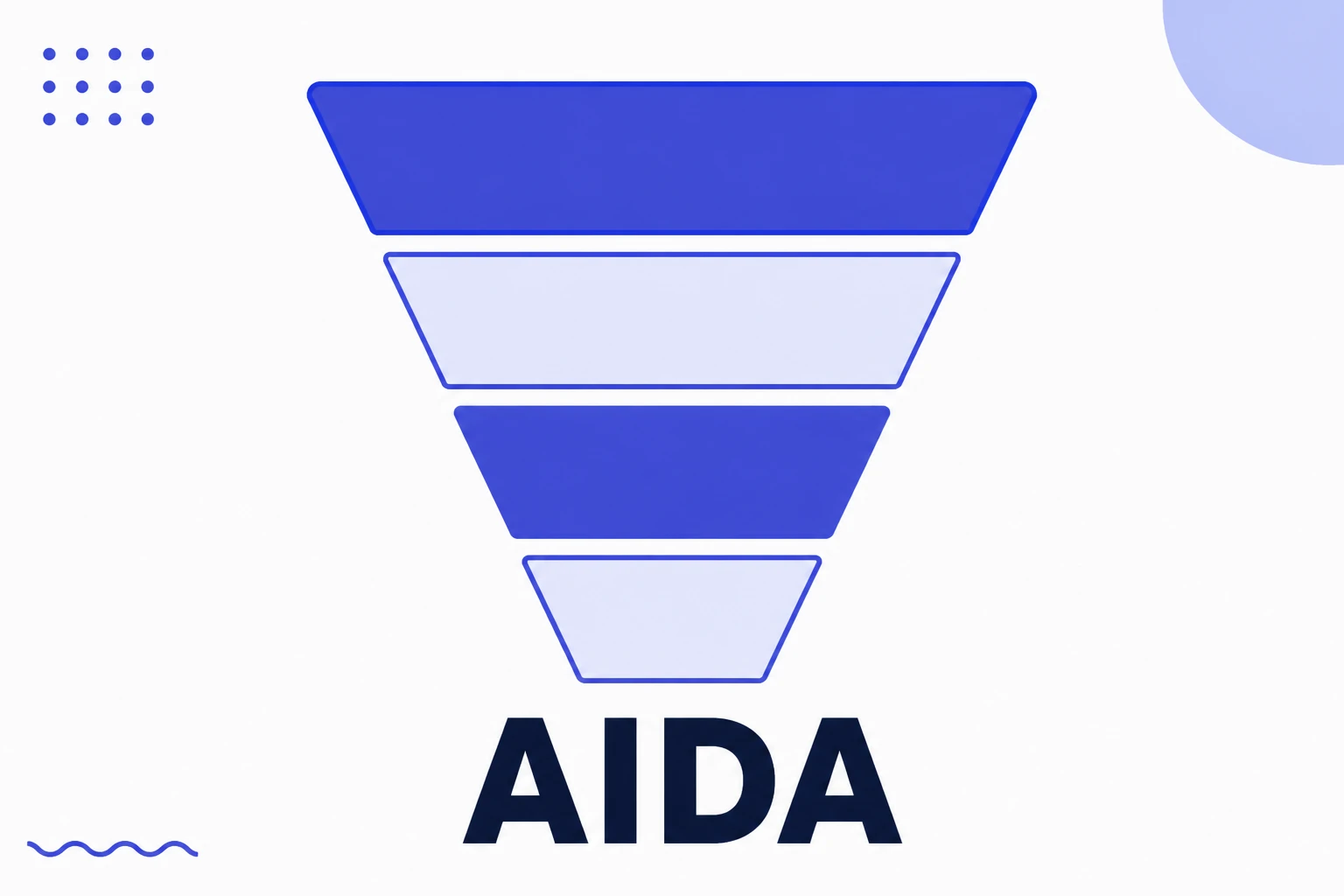
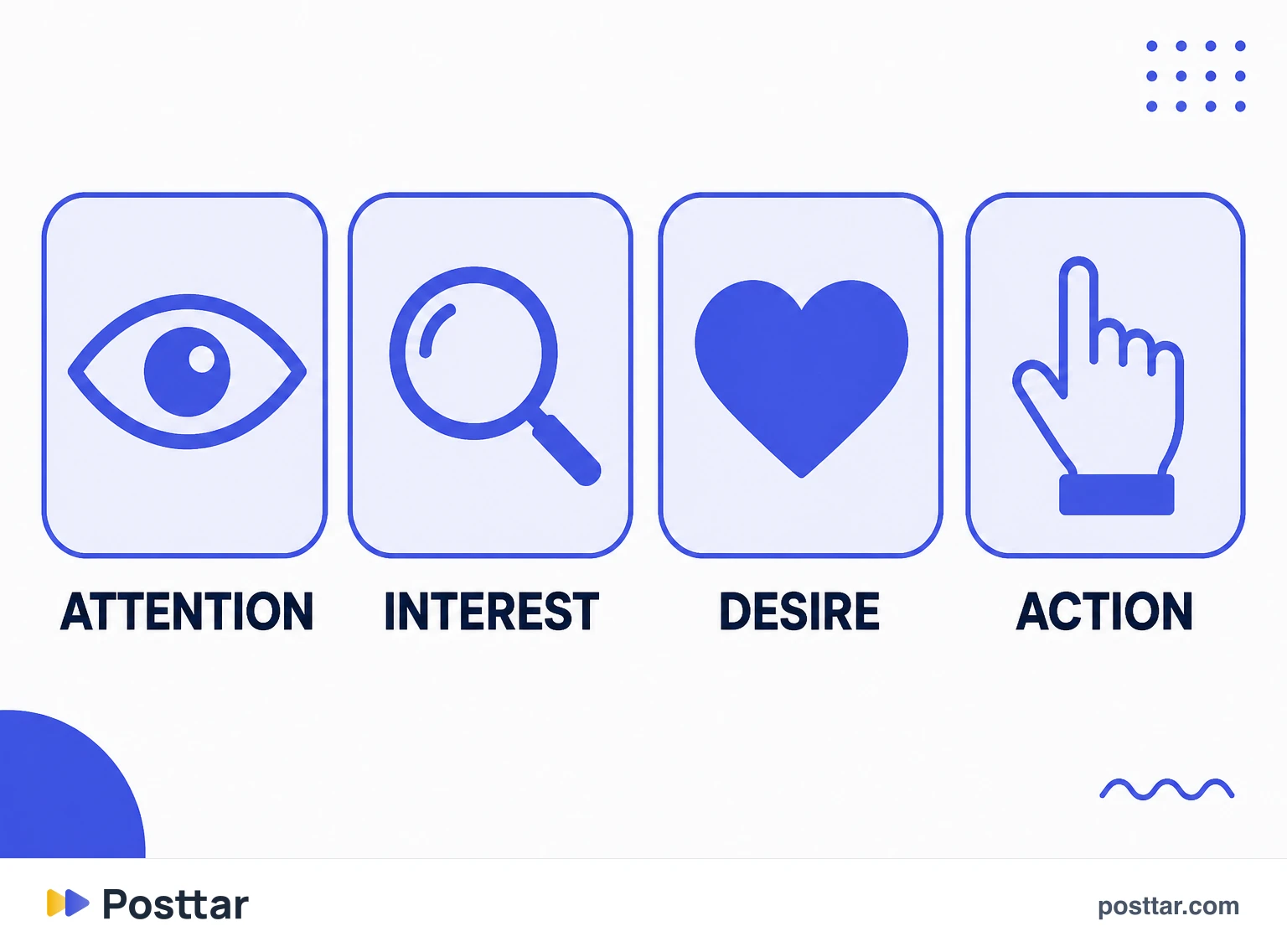
AIDA is attention, interest, desire and action.
- Attention. Making people stop, before anything else.
- Interest. Giving a reason to continue.
- Desire. Turning understanding into wanting.
- Action. Saying exactly what to do now.
The four stages
- Attention. The headline, the cover, the first seconds. Without this stage none of the others happen, and it is where most people are lost.
- Interest. Here the person stopped but does not yet care. The job is connecting the subject to their problem, usually by naming the pain in the words they would use.
- Desire. The gap between understanding the solution exists and wanting that solution. This is where proof, demonstration and projected outcome come in.
- Action. The CTA: specific, with a clear object and a reason.
The order matters more than the names. Asking for action before desire is the most common mistake, and it happens every time someone tries to sell on first contact.
How to apply it in short content
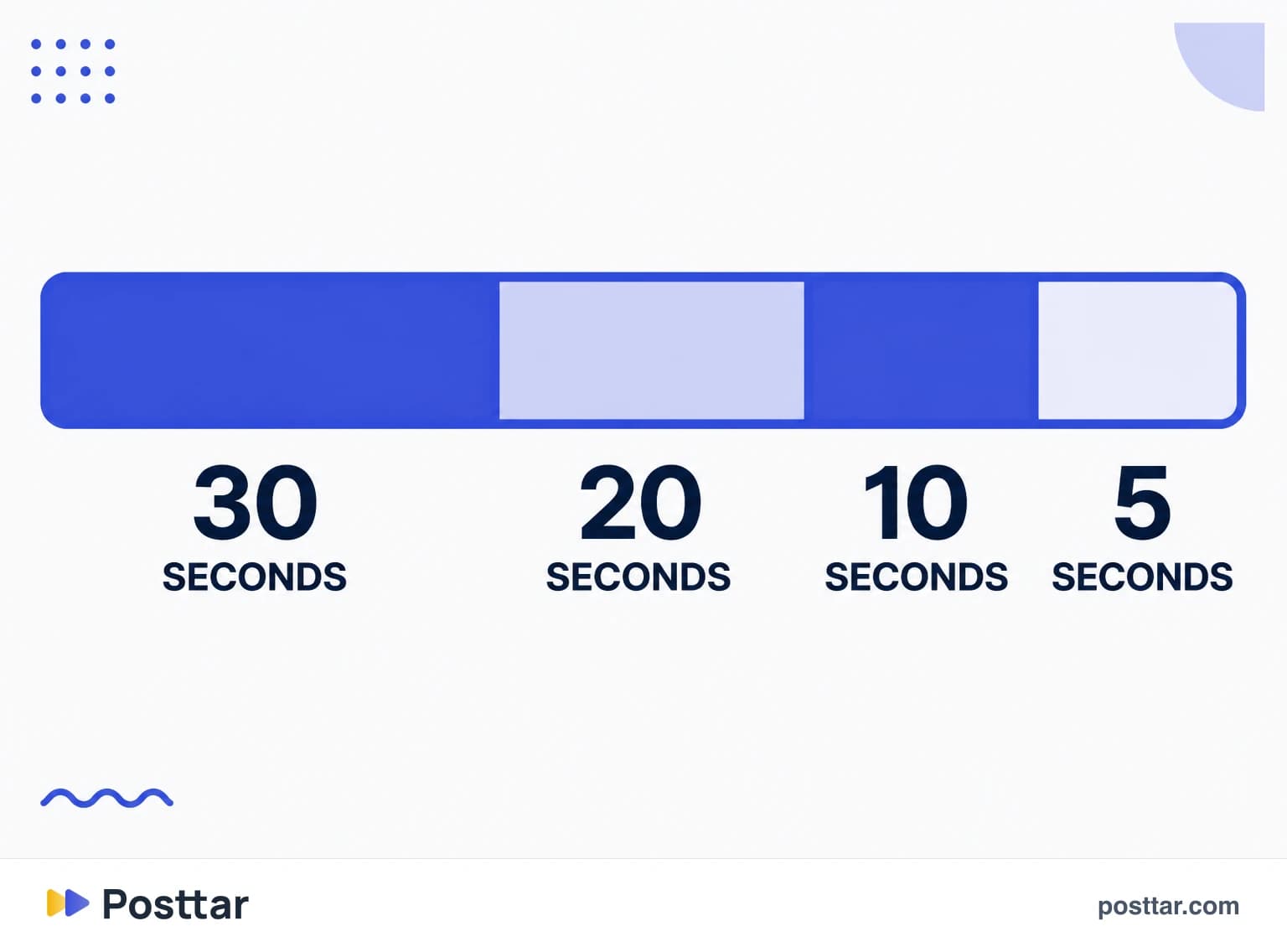
AIDA was born for print ads and sales pages, long formats. In a thirty second Reel the structure still holds, with the stages compressed.
A direct mapping:
- Attention: the first three seconds, or the cover text.
- Interest: the sentence saying who it is for and why it matters.
- Desire: the demonstration, the before and after, the concrete case.
- Action: the last sentence.
In a carousel the fit is even more literal: a block of slides per stage.
What the formula does not solve
Worth being honest about the limits, because AIDA is taught as if it were sufficient.
- It does not tell you what to write. Only the order to organise it in. The content of each stage comes from research, and that is where the hard work is.
- It assumes a linear path. In practice nobody consumes in a single sequence: someone sees a Reel today, the profile a week later and buys at a third moment.
- It ignores awareness stage. Someone who already knows the product does not need to walk through interest and desire from scratch. Insisting tires them.
- It does not handle objections. More recent models such as PAS deal better with a reader's real resistance.
When to use it
AIDA works well when the path really is one single piece, with a beginning and an end: a sales page, an ad, an email, a video meant to convert.
It works badly as a model for an entire content strategy. For that, thinking in terms of a content funnel is truer to real behaviour, because it accepts that the stages happen across different pieces and in different orders.
The most useful application of the formula is not writing with it, it is diagnosing with it. When something does not convert, asking which of the four stages the person left at tends to find the problem fast.
Checklist
- There is something that makes people stop before any explanation.
- I name the pain before presenting the solution.
- There is proof or demonstration, not just a claim.
- I ask for the action after desire, not before.
- I also use the formula to diagnose where people dropped off.
Frequently asked questions
What is the AIDA model?
It is the classic four stage persuasion model: attention, interest, desire and action. It describes the sequence someone has to pass through before acting, first stopping, then becoming interested, then wanting, and only then doing.
What does each letter in AIDA stand for?
A for attention, which makes people stop; I for interest, which gives a reason to continue; D for desire, which turns understanding into wanting; and A for action, which says what to do now. The order matters more than the names.
How do you apply AIDA on Instagram?
In Reels, the first three seconds are attention, the next sentence is interest, the demonstration is desire and the closing line is action. In carousels the fit is even more literal: a block of slides for each stage.
Is AIDA still relevant?
As a structure yes, because the sequence it describes still holds. What aged is the assumption of a linear path inside one single piece: today someone sees a post, the profile days later and decides at a third moment.
What is the difference between AIDA and PAS?
AIDA organises the journey from stranger to action in four stages. PAS starts from the problem, agitates its consequence and presents the solution, which handles resistance better and works better in short text.
Related concepts
PAS
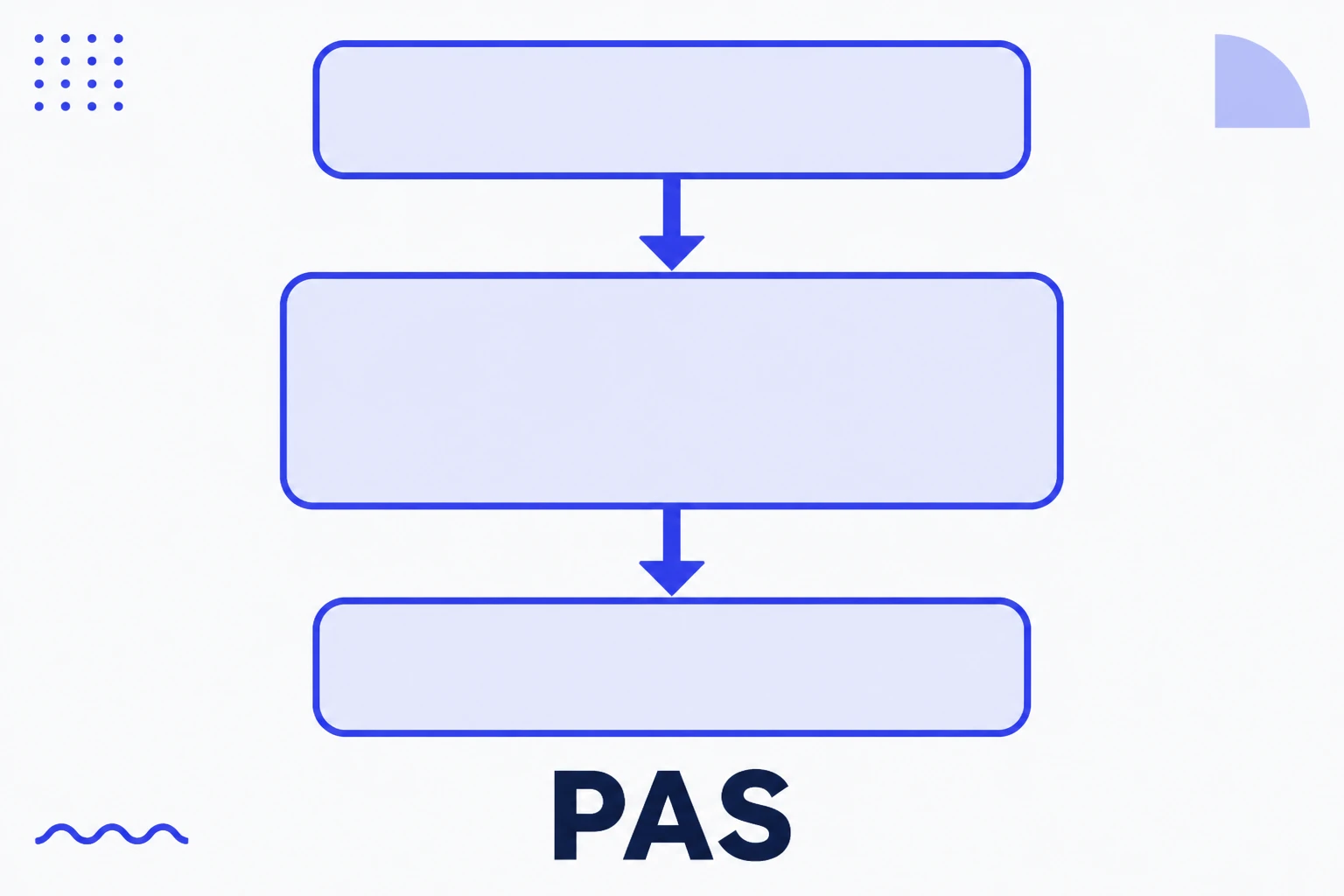
PAS is the three stage copywriting formula: problem, agitation and solution. You name the problem the person has, show the consequence of leaving it unsolved, and then present the way out. It is shorter and more direct than AIDA, and works better in short formats precisely because it starts from what the person already feels instead of building interest from scratch.
Read the entry
Copywriting
Copywriting is writing built to provoke a specific action: buy, sign up, reply, click. What separates it from other kinds of writing is not style, it is the success criterion. A literary text is judged by the experience it creates; copy is judged by how many people did what it asked. That changes everything, including the order in which it gets written.
Read the entry
CTA
CTA stands for call to action: the instruction telling a person what to do next. It is the element that turns attention into results, and the most wasted of all, because most pieces either ask for nothing or ask for several things at once. One ask per piece, specific and with a reason, returns more than the full list of verbs.
Read the entry
Headline
A headline is the opening line that decides whether the rest of the content gets consumed. It is the highest leverage element of any piece: if it fails, everything after it stops existing, however good it is. On Instagram it appears in three different places, and each carries a constraint of its own that changes how it should be written.
Read the entry