CTA slide: the last frame is seen by few, and that is why it has to change

By Tiago Costa·Updated on August 5, 2026

Definition
The CTA slide is the last frame, where the call to action goes.
- It is the least seen frame of the whole sequence.
- One ask only. Stacking cancels everything out.
- Whoever gets there is the warmest audience, which changes the ask.
- The CTA also fits earlier, and sometimes returns more.
The paradox of the last frame
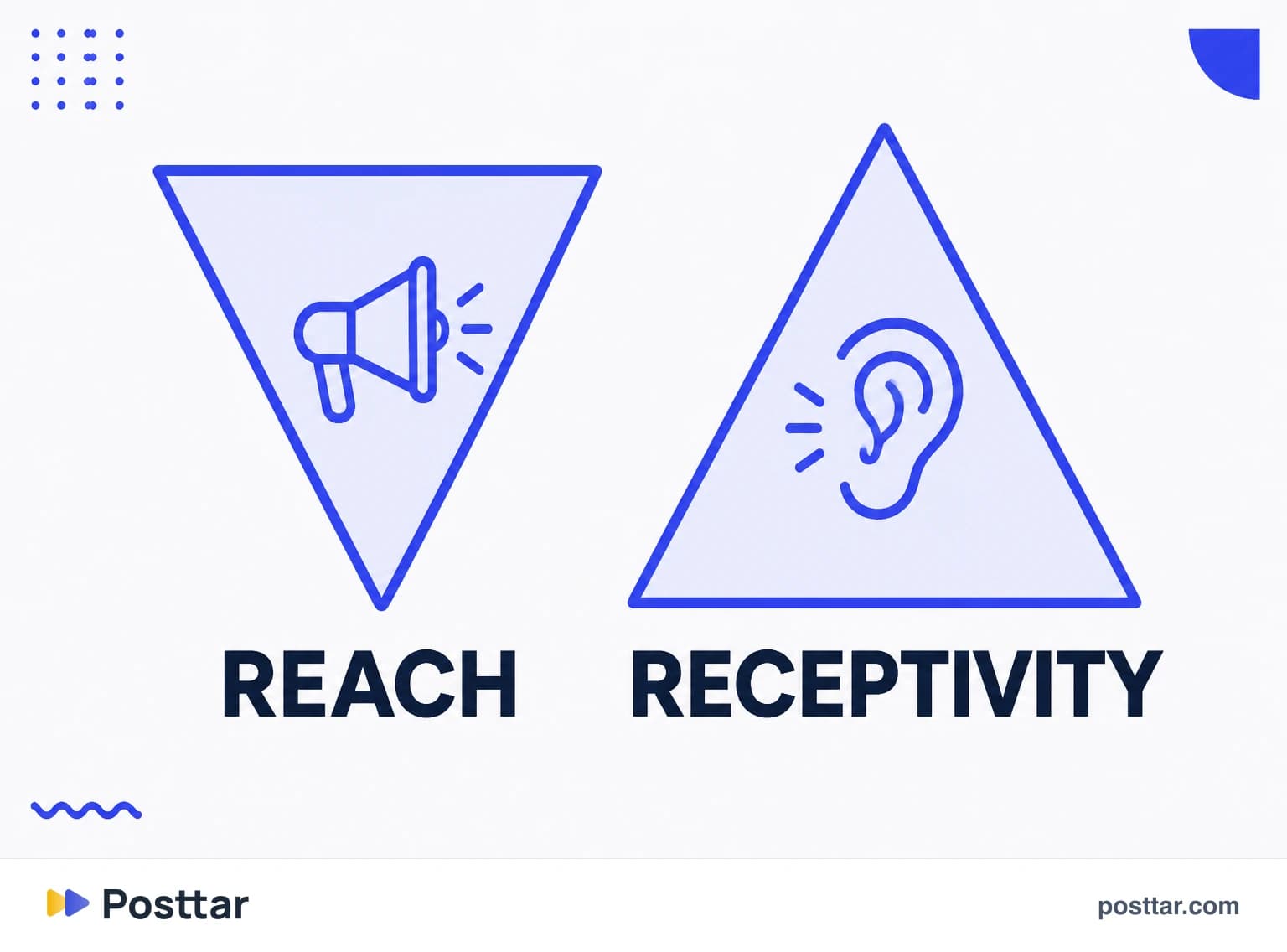
There is a real tension in the format. The last slide is where the call to action naturally goes, and it is also the frame fewest people see.
But there is another side, and it is what saves it: whoever reaches the last frame is the most qualified audience the piece produced. That person consumed everything, liked it enough not to abandon, and is at the point of highest receptivity.
So: fewer people, far warmer. The mistake is treating that frame as though convincing were still needed. It is not. Whoever got there is already convinced; all that remains is saying what to do.
What to put there
One ask, specific, with a reason. The CTA rules apply in full here, and the most important is not stacking.
Options, picking one:
- Save. Makes sense when the carousel is reference material someone will want to revisit.
- Share. When the content serves a specific person the reader knows.
- Comment something concrete. A question answerable in three words, not "what did you think?".
- Go to the profile or the link. When there is a real next business step.
And it is worth including something almost nobody does: a summary of what was said. The last frame is the best place to recap in one sentence, because that is what people carry away.
The CTA that does not sit at the end
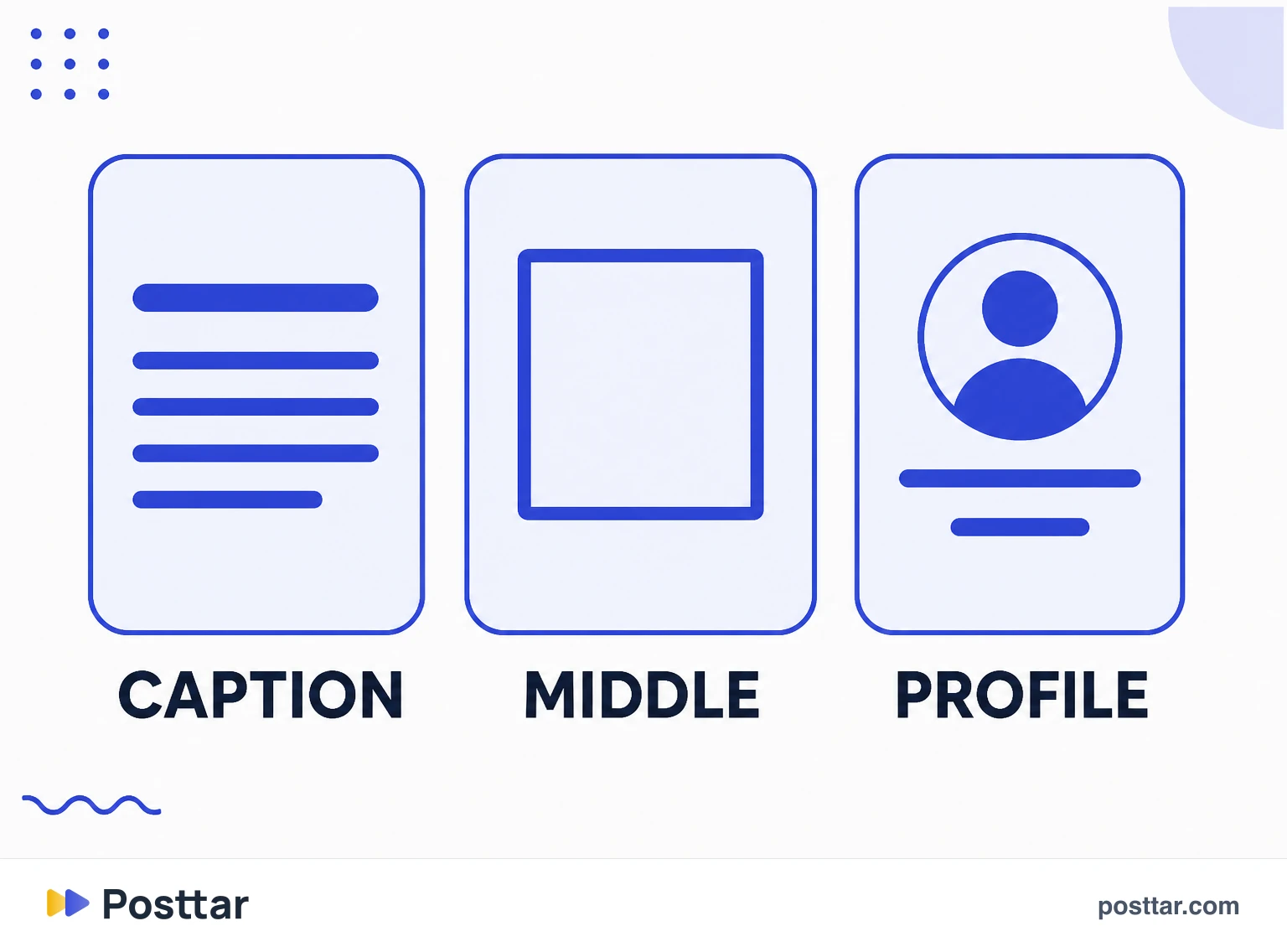
Since the last frame is the least seen, distributing the asks beats concentrating them.
- In the caption. It is read by people who never swiped the carousel, so an ask there reaches more.
- Mid sequence. A save request placed on the frame where the content becomes most useful usually returns more than the same request at the end.
- On the profile. The bio and highlights work as a permanent call, and they are where people go after liking the content.
The practical conclusion is that the CTA slide should not be the only place an ask exists.
Common mistakes
- Five stacked requests. "Like, save, comment, share and follow me" produces zero actions, not five.
- A logo only frame. A final slide with a logo and nothing else wastes the most receptive frame of the piece.
- Hard selling at the end. If the carousel was educational throughout, an aggressive offer on the last frame breaks the contract with whoever read it.
- Repeating the cover. Closing by showing the title again adds nothing.
Checklist
- There is one ask only, specific and with a reason.
- There is a one sentence summary of the content.
- I did not stack engagement verbs.
- I also placed an ask in the caption.
- The last frame is not just a visual signature.
Frequently asked questions
What should the last slide of a carousel say?
A one sentence summary of the content and a single specific ask with a reason. Whoever reaches the last frame is already convinced, so there is no need to convince again, only to say what to do.
Why is the last slide the least seen?
Because only people who swiped the entire sequence reach it. In exchange, that is the most qualified audience the piece produced: fewer people, far warmer, and at the point of highest receptivity.
Can I ask for several actions on the final slide?
It is not advisable. Asking for likes, saves, comments, shares and a follow at once produces no action rather than five. Pick the ask matching the real objective of that content.
Where else should the CTA go besides the last slide?
In the caption, which is read by people who never swiped the carousel, and mid sequence, on the frame where the content becomes most useful. The profile also works as a permanent call through the bio and highlights.
Is it worth closing a carousel with the logo?
Not on its own. A final frame with only a visual signature wastes the most receptive slide of the piece. The logo can appear, as long as it shares space with a summary and a clear ask.
Related concepts

Carousel
A carousel is the Instagram post that holds up to 20 images or videos in a single publication, navigated by swiping sideways. It occupies the same feed space as a regular post but asks the viewer for one extra action, and that action is what makes it valuable: every frame advance adds dwell time, and the format gets a second delivery chance, because Instagram can re-show the post starting from a different frame to people who did not interact the first time.
Read the entry
CTA
CTA stands for call to action: the instruction telling a person what to do next. It is the element that turns attention into results, and the most wasted of all, because most pieces either ask for nothing or ask for several things at once. One ask per piece, specific and with a reason, returns more than the full list of verbs.
Read the entry
Turning slide
The turning slide is the middle frame of a carousel that renews interest before someone gives up. Every carousel has an abandonment curve, and it falls hardest between the third and fifth frame, once the cover's novelty is gone and the end is still far away. The turning slide exists to place something unexpected at exactly that point.
Read the entry
Opening slide
The opening slide is the first frame of a carousel, the cover appearing in the feed. It is the highest leverage element of the whole piece: if it does not stop the thumb, the other nine slides do not exist. And it has a particularity almost nobody considers, it appears in two different contexts, full size in the feed and as a thumbnail in the profile grid.
Read the entry