Instagram likes: why they are worth less than they look

By Tiago Costa·Updated on August 5, 2026
Definition
A like is the simplest interaction on Instagram: one tap that records approval.
- Zero cost for the viewer, which is why it is the most abundant.
- Weaker signal than saving or sharing.
- It is public on the post, unlike a save.
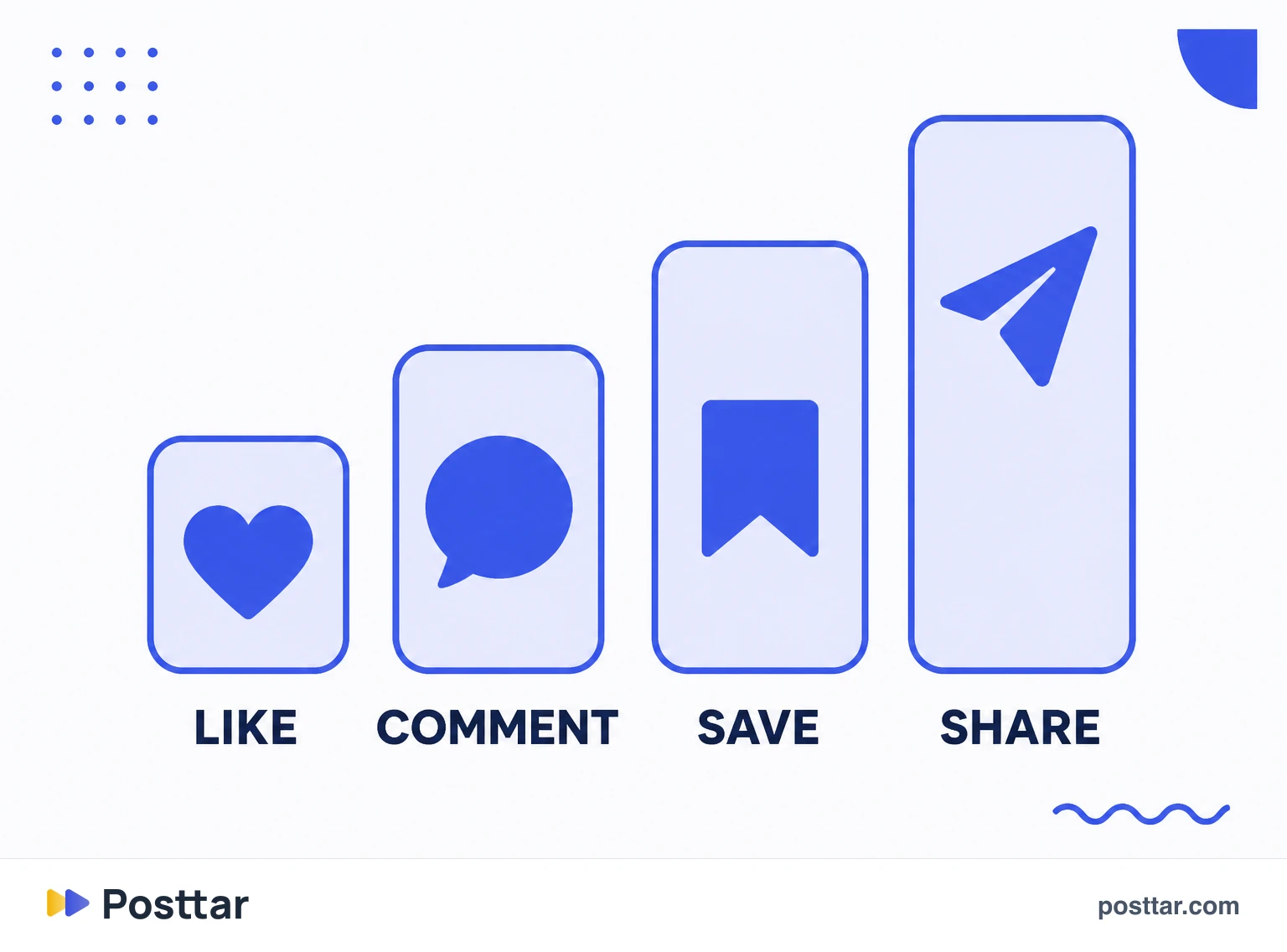
- It does not drive reach alone. What pushes is sharing.
What a like measures
A like records passive approval. It says the person saw it, liked it enough to tap once and moved on. It does not say they found it useful, does not say they would come back and does not say they would recommend it.
That does not make it useless. Likes are the fastest thermometer there is: they arrive within minutes, carry enough volume to signal early, and are publicly visible, which makes them an element of social proof on the post itself.
The problem is using them as the headline metric. It is the one interaction of the four that costs the person almost nothing, and therefore the one that least differentiates good content from acceptable content.
Why it weighs less in distribution
The ranking system weights interactions by effort. Liking is a one-second gesture; sharing requires choosing a person and owning the recommendation; saving requires recognising future usefulness.
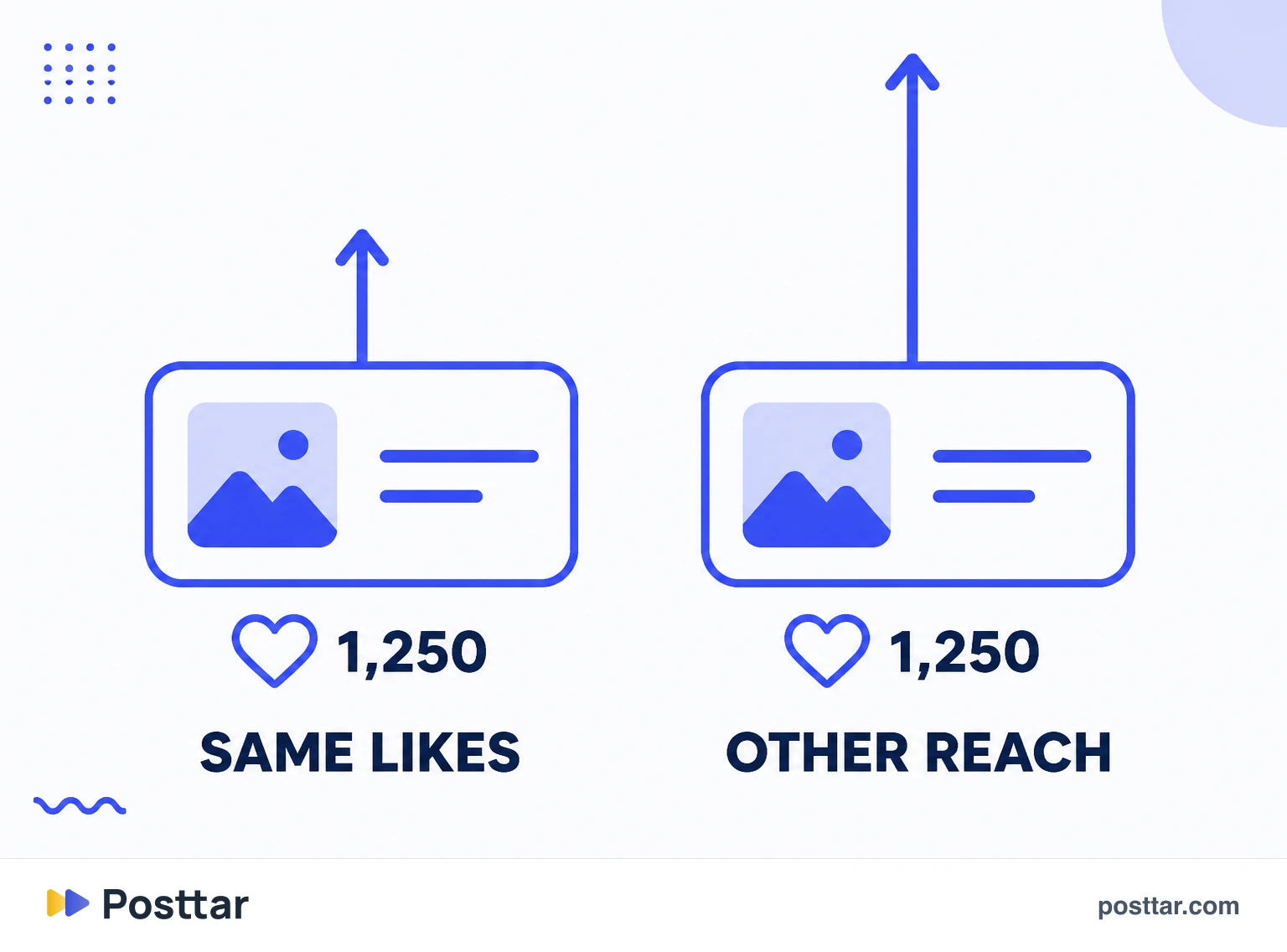
In practice that means two posts with the same number of likes can have very different reach, depending on what else happened alongside. Which is why reading engagement means looking at composition, not just the total.
One consequence almost nobody applies: when the goal is growth, optimising a piece for saves and shares pays more than optimising for likes, even if the visible number ends up smaller.
Hidden likes and what changed
Instagram lets you hide the public like count, both on your own post and in the feed you see. The number still exists in the publisher's insights; what disappears is the display to third parties.
Two practical consequences:
- External tools lose the data. Engagement calculators that scrape the visible number cannot compute anything when it is hidden.
- Social proof moves. Without the count, comments start carrying the perception of popularity.
Anyone working with a media kit should consider this: hiding likes makes outside evaluation harder, and some brands still ask for the number.
Where likes mislead
- Bought. It is the easiest and cheapest interaction to fake, and the one that moves revenue least. Likes rising without profile visits is a red flag.
- From giveaways. They bring volume from people who will not come back.
- Compared across accounts of different sizes. An absolute number always favours the bigger profile.
- Used as a proxy for sales. There is no stable relationship between likes and conversion in any niche.
Checklist
- I do not judge content by likes alone.
- I look at engagement composition, with saves and shares broken out.
- I compare against the median of the last thirty of the same format.
- I get suspicious when likes rise without profile visits following.
- If I hid the count, I know it affects how outsiders evaluate my profile.
Frequently asked questions
Who can see my likes on Instagram?
On public posts, anyone who can see the post can open the list of who liked it, unless the account hid the count. There is no consolidated public list of everything you have liked.
Do likes help reach on Instagram?
They help, but less than saves and shares. Because liking costs the viewer almost nothing, the signal it sends is weaker. Two posts with the same number of likes can have very different reach depending on the rest of the composition.
What happens if I like and unlike quickly?
The notification may already have been sent, even if you undo it right after. Unliking removes it from the count and the list, but does not guarantee the alert never reached the other side.
Is it worth hiding likes?
It depends on what you do with the profile. Hiding reduces social comparison and the weight of the number in perception, but it makes evaluation harder for brands and for external tools, which depend on the visible figure to calculate engagement.
Are bought likes detectable?
Often yes, by the pattern rather than the number. Likes rising with no matching movement in profile visits, saves or comments is the classic signature. Beyond the platform risk, they move no revenue.
Related concepts

Engagement
Engagement is the set of interactions people have with a piece of content: likes, comments, saves and shares, plus Story replies and mentions. It is an absolute count, not a percentage, which is why it only makes sense against a base, either reach or follower count. The four interactions are not equal: the ones that cost the viewer more effort are the ones that push distribution hardest.
Read the entry
Comments
A comment is the interaction where someone writes publicly under a post. It costs time and exposes the writer, which makes it a stronger signal than a like and one of the interactions that most sustain feed distribution. It is also the only one that creates conversation: every reply you write reopens the post for the person who commented and keeps the piece alive for longer.
Read the entry
Saves
A save is when someone files your post away to return to it later. It is a private interaction: it does not appear on the post, nobody but the saver knows, and you only see the aggregate total in insights. Precisely because it has no social component, it is one of the most honest signals available, since people save for their own usefulness rather than to be seen saving.
Read the entry
Shares
A share is when someone sends your post to another person in Direct or reposts it to their own Stories. It is the most expensive interaction for the person acting, because it requires choosing a recipient and owning the recommendation, and that is why it pushes distribution outside your audience harder than anything else. No other interaction delivers content to a non follower through a human recommendation.
Read the entry