Slide advance rate: the carousel retention curve, and where it shows the flaw

By Tiago Costa·Updated on August 5, 2026

Definition
Slide advance rate is how many move from one frame to the next.
- It is the carousel retention curve.
- It points at the exact frame where the audience gave up.
- The biggest drop is 1 to 2, and it indicts the cover.
- Compare pieces, do not read one carousel in isolation.
How to read it
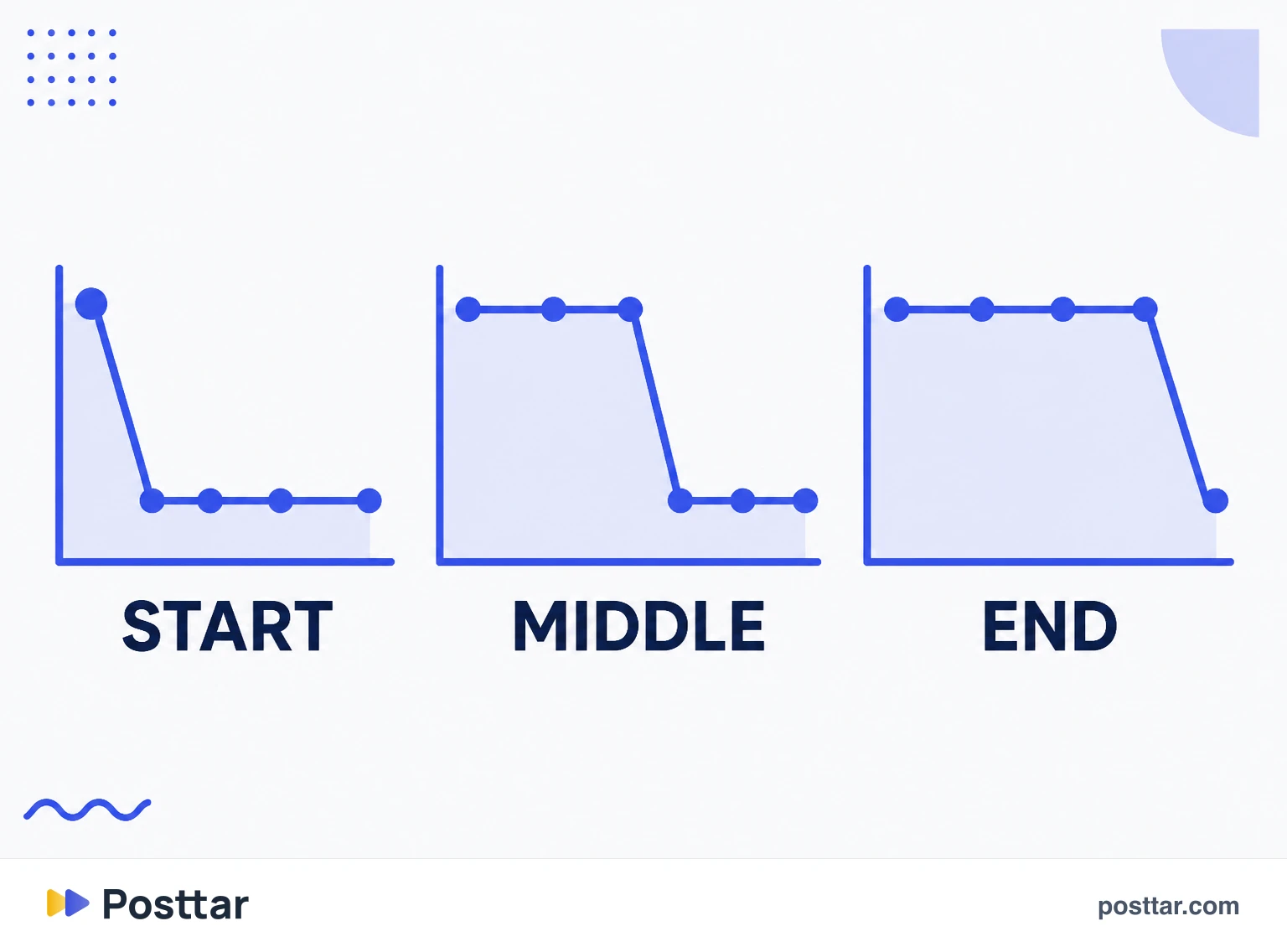
The useful reading is not the absolute number, it is the shape of the curve. Three patterns cover almost everything:
- A brutal drop from frame 1 to 2. The problem is the cover: it promised too little or too vaguely. Or, worse, it promised something frame 2 did not confirm.
- A drop in the middle, between the third and fifth. The content became predictable. This is the missing turning slide.
- A stable curve falling only at the end. That is normal and healthy. Not everyone needs to reach the CTA slide.
What does not work is reading one carousel in isolation. The metric only says something when compared against your other pieces, because the normal baseline varies widely by account and by niche.
The two drop points
Worth separating, because the causes and the fixes differ.
The first drop, from frame 1 to 2, is the largest in any carousel, and that is expected: those are the people who saw the cover and decided not to enter. Fixing it means changing the cover's promise, not the content.
The second drop, in the middle, is the most expensive and the least noticed. Someone who reached the third frame already invested attention; losing them means the content did not sustain what the cover sold. Fixing it means changing the sequence.
One reading that helps: if the first drop is large but the curve is flat afterwards, the cover is attracting the wrong audience. The content pleases whoever stays, but the promise does not match them.
What to do with the diagnosis
Each pattern has a specific fix.
- Drop at the start. Rewrite the cover with a more concrete promise, increase the type size and test whether it is legible as a thumbnail.
- Drop in the middle. Place something unexpected around the fifth frame and check whether frame 2 delivers value rather than an introduction.
- Drop right at the second. This is the most serious pattern: it means the cover promised and the content did not deliver. It is the only case where the fix is the whole content rather than one frame.
- Good curve and low reach. The problem is not the carousel, it is distribution. Changing the slides will not solve it.
What it does not measure
Two caveats prevent wrong conclusions.
It does not measure absolute quality. A ten frame carousel and a five frame one are not comparable: short sequences have better advance rates by construction, which does not make them better.
It does not measure results. A piece can have excellent advance and no conversion, because holding attention and generating action are different things. Always cross reference with saves, shares and profile visits.

Checklist
- I compare the curve across my pieces rather than in isolation.
- I can tell a cover drop from a content drop.
- I do not compare short carousels with long ones.
- I cross reference with saves and shares before concluding.
- If advance is good and reach is low, I look at distribution.
Frequently asked questions
What is slide advance rate?
It is the proportion of people moving from one frame to the next inside a carousel. It works as the video retention curve applied to a static format, pointing at the exact frame where the audience gave up.
How do you read a carousel advance curve?
By its shape rather than the absolute number. A brutal drop from the first to the second indicts the cover; a drop between the third and fifth indicates predictable content; a stable curve falling only at the end is normal.
What is a good slide advance rate?
There is no universal number, because the baseline varies widely by account, by niche and by frame count. The metric only says something compared against your own pieces, and short sequences score better by construction.
My carousel loses people on the second slide. What do I do?
That is the most serious pattern, because it means the cover promised something the content did not deliver. Unlike the other drops, the fix is not one specific frame: it is checking whether the content delivers what the cover sold.
Does a good advance rate mean a good carousel?
Not necessarily. Holding attention and generating action are different: a piece can have excellent advance and no conversion. Always cross reference with saves, shares and profile visits before concluding.
Related concepts

Carousel
A carousel is the Instagram post that holds up to 20 images or videos in a single publication, navigated by swiping sideways. It occupies the same feed space as a regular post but asks the viewer for one extra action, and that action is what makes it valuable: every frame advance adds dwell time, and the format gets a second delivery chance, because Instagram can re-show the post starting from a different frame to people who did not interact the first time.
Read the entry
Turning slide
The turning slide is the middle frame of a carousel that renews interest before someone gives up. Every carousel has an abandonment curve, and it falls hardest between the third and fifth frame, once the cover's novelty is gone and the end is still far away. The turning slide exists to place something unexpected at exactly that point.
Read the entry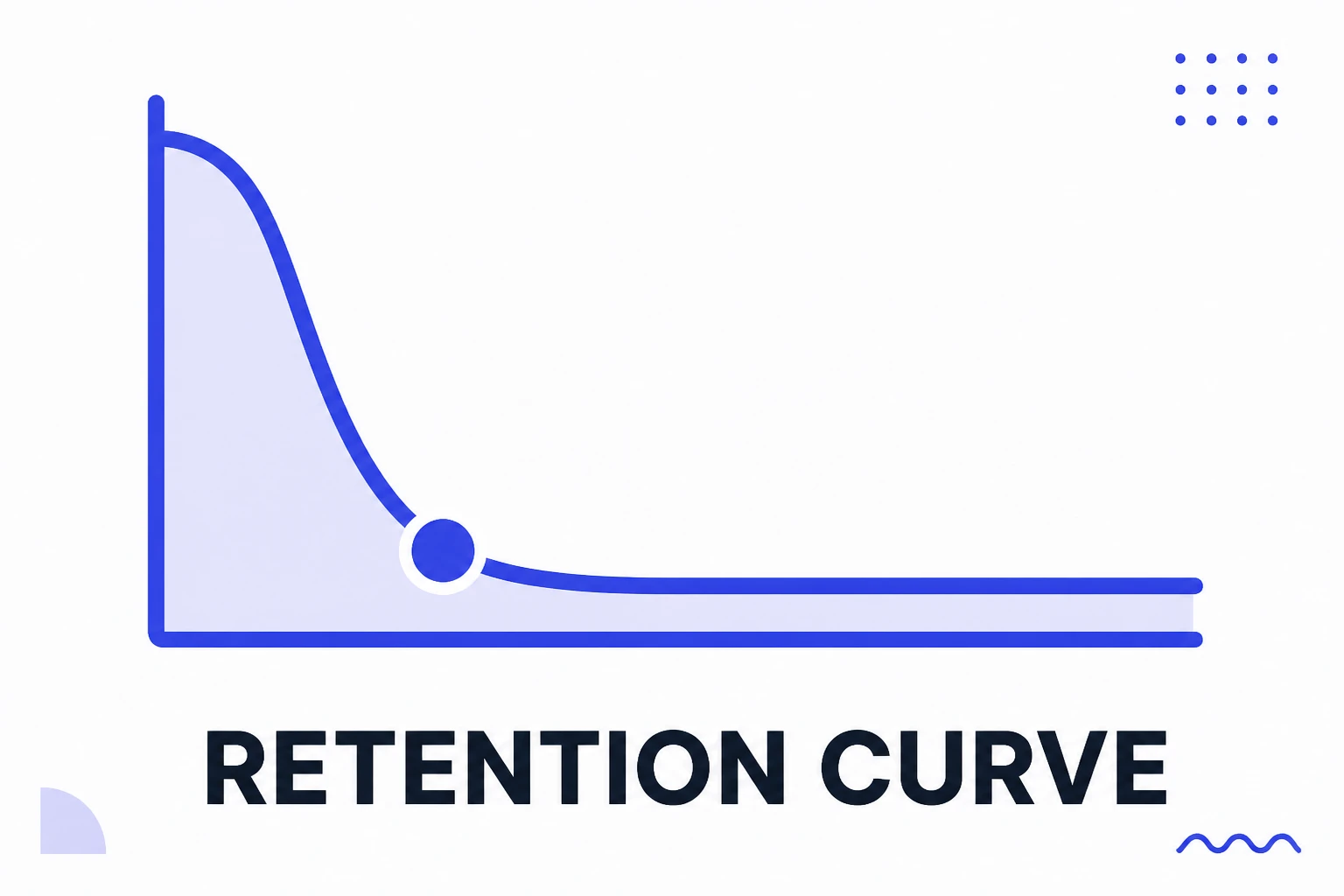
Retention curve
The retention curve is the chart showing what percentage of the audience was still watching at each second of a video. Unlike average retention, which compresses everything into one number, the curve shows the exact location of the loss, and it is the only video metric that points at what to fix rather than merely reporting that something is wrong.
Read the entry
Opening slide
The opening slide is the first frame of a carousel, the cover appearing in the feed. It is the highest leverage element of the whole piece: if it does not stop the thumb, the other nine slides do not exist. And it has a particularity almost nobody considers, it appears in two different contexts, full size in the feed and as a thumbnail in the profile grid.
Read the entry